Does Hydroxyapatite Toothpaste Actually Work?
If you're reading this, you've probably reached one of two crossroads. Either you're thinking about leaving fluoride behind, but want to know whether a fluoride-free toothpaste can truly deliver - or you've already moved to hydroxyapatite and you're wondering whether the one you're using is actually effective.
Underneath both is the same honest question: does hydroxyapatite toothpaste actually work, and does it matter which form you choose?
It's a fair thing to ask, because until recently the evidence didn't make it easy to answer. Most studies don't answer the full puzzle. They test a single ingredient against a control, not the whole field on equal terms - so comparing fluoride, nano-hydroxyapatite and micro-hydroxyapatite side by side has been surprisingly hard to do.
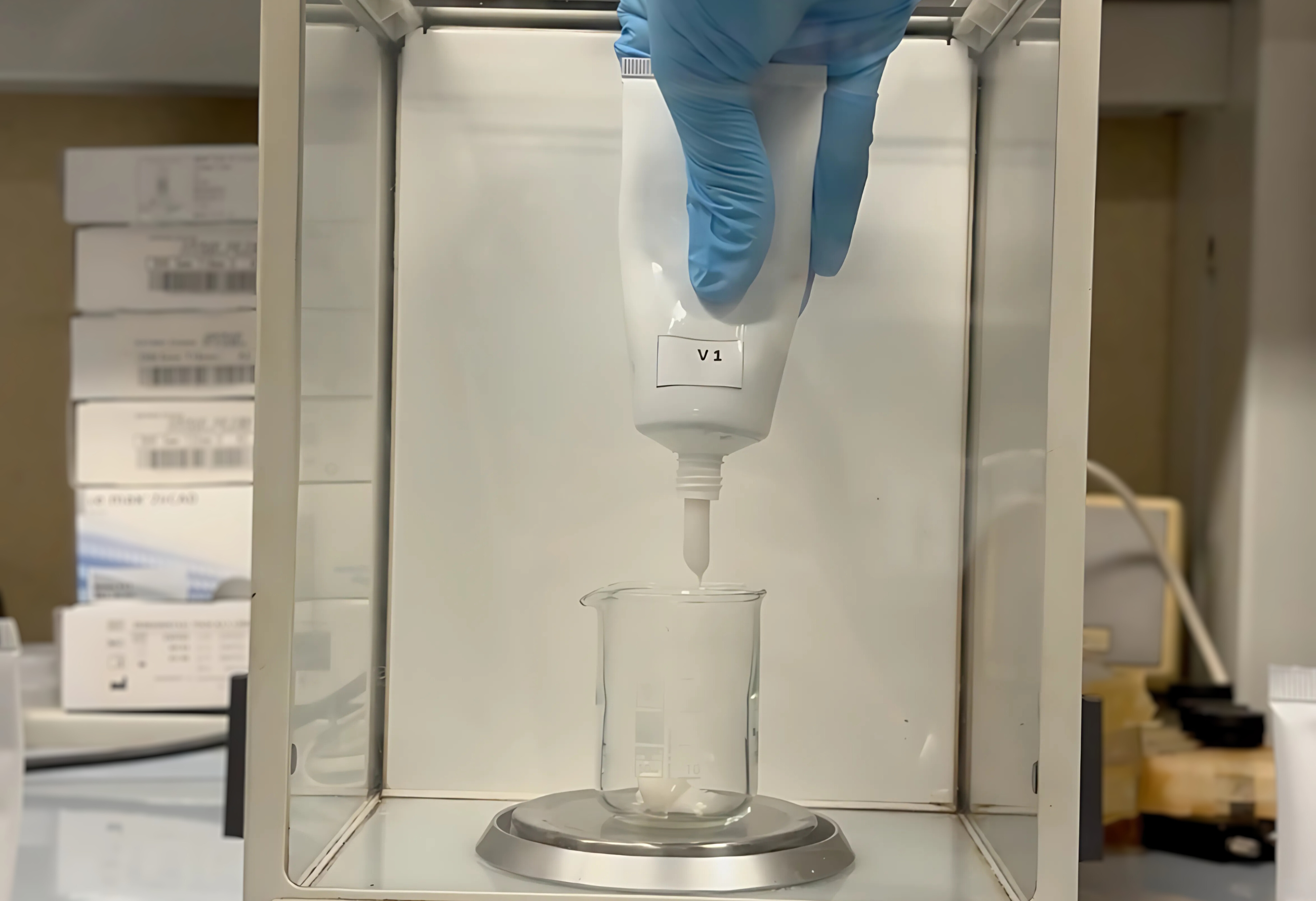
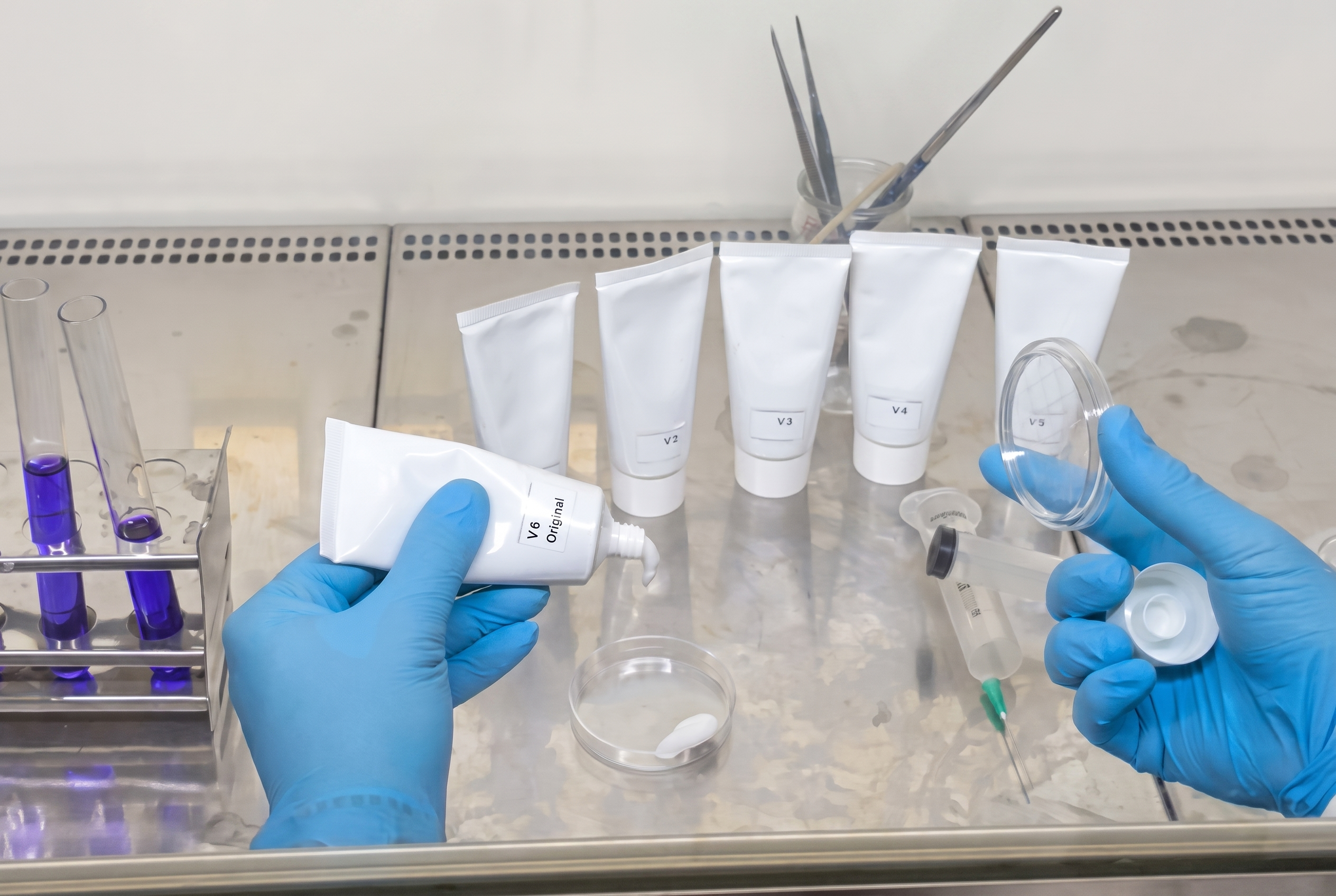
So we set out to answer it properly. Working with researchers at the University of Milan, we put fluoride, nano-hydroxyapatite, micro-hydroxyapatite and their combinations through a single in-vitro protocol - measuring the performance of different toothpastes in the same way, at the same time. What follows is what that testing showed: not a conclusion we're asking you to take on trust, but the comparison itself, laid out so you can see exactly how they differ.
In this article (click to jump ahead)
- What actually is tooth enamel
- How enamel loses mineral
- How enamel rebuilds - and why it isn't always enough
- How fluoride works
- How hydroxyapatite works
- Nano vs micro hydroxyapatite
- Fluoride, nano- and micro-HAP: at a glance
- What we tested, and how
- What the testing showed
- A closer look at the results
- So which should you use?
What actually is tooth enamel.
Enamel is the hard, outer shell of each tooth - the white surface you can see. It's the most mineralised tissue in the human body: around 97% mineral by weight, which is what makes it harder than bone. That mineral is hydroxyapatite, a form of calcium phosphate (chemically Ca₁₀(PO₄)₆(OH)₂), arranged into tightly packed, ordered crystals that give enamel its strength and its translucence.
Here's the part that changes how you should think about looking after it: enamel is not a living tissue. It has no cells, no nerves and no blood supply of its own. It's built just once, while a tooth is still forming under the gum, by specialised cells that are gone by the time the tooth breaks through. Bone and skin are living tissues that can knit themselves back together from the inside. Enamel can't. Once it's formed, it has no biological way to regrow what it loses.
That single fact sits underneath everything that follows. Because enamel can't repair itself from within, protecting it comes down to one thing: the balance of mineral at its surface - what's lost to acid, and what's put back. The rest of this guide is about that balance, and how you can tip it in your favour.
How enamel loses mineral
Enamel is under quiet chemical attack every day, and the mechanism is worth understanding, because it's the exact process the rest of this guide is about reversing.
The trigger is acid. Your mouth normally sits at a near-neutral pH of around 7, and in that environment enamel is stable. But when acid enters the picture and the pH around your teeth falls below about 5.5 - a figure known as the critical pH - the balance flips. The fluid surrounding the enamel becomes undersaturated with respect to its mineral, and calcium and phosphate ions begin dissolving out of the enamel into your saliva. This loss is called demineralisation.
That acid comes from two sources, and both matter:
-
What you eat and drink. Citrus, soft drinks, fruit juice, wine, coffee and vinegary foods are all acidic enough to push the mouth below critical pH directly, on contact.
- The bacteria in plaque. The bacteria that live in dental plaque ferment sugars and starches from your food and excrete acid as a by-product. This is why frequent snacking is harder on enamel than the sugar quantity alone would suggest - each exposure restarts the acid clock.
A single acid exposure is minor, and on its own it reverses. The damage is a matter of frequency and time. Every acidic episode opens a window of net mineral loss; when those windows come often enough that mineral leaves faster than it's replaced, the losses accumulate. Over months and years, the enamel surface gradually softens and thins. That's when it can begin to look dull, feel rough, or turn sensitive as the protection wears down.
And because - as we've seen - enamel can't regenerate itself from within, that lost mineral can only be replaced from the surface. Which raises the obvious question: what puts it back? That's what your saliva is quietly doing all day, and it's where we turn next.
How enamel rebuilds - and why it isn't always enough
If acid pulls mineral out of enamel, something has to put it back - otherwise every tooth would simply dissolve over a lifetime of meals. That job falls to your saliva, and it's more capable than most people realise.
Saliva is naturally supersaturated with calcium and phosphate - it carries a higher concentration of those two ions than it would normally be able to hold in solution. Those are the same ions that dissolve out of enamel during an acid attack. So when the acid clears and conditions return to neutral, saliva can deposit that calcium and phosphate back onto the enamel surface, where it rebuilds onto the existing crystal structure. This is natural remineralisation, and it runs quietly after every meal.
Saliva does a second job, too. It contains bicarbonate, which acts as a buffer - neutralising acid and lifting the pH back above the critical 5.5 threshold. The faster your mouth returns to neutral, the sooner remineralisation can resume and the shorter each window of mineral loss becomes.
So enamel health isn't a one-way slide. It's a balance - a daily tug-of-war between demineralisation when acid is present and remineralisation once saliva regains the upper hand. When the two sides roughly match, enamel holds steady.
Why saliva alone isn't always enough
The catch is that saliva's 'repair kit' is finite. It can only redeposit the mineral it happens to be carrying, and only once the pH has recovered. If you tip the balance too far toward the acid side, it can't keep pace. Three everyday factors do exactly that:
-
How often you eat and drink. Grazing through the day or sipping acidic drinks slowly keeps the mouth below critical pH for longer, leaving fewer neutral windows for remineralisation to happen.
-
How much saliva you produce. A naturally drier mouth - from medication, age, exercise or certain health conditions - means less buffering and less mineral on hand to redeposit.
- How acidic your diet is. A consistently high acid load simply asks more of saliva than it can return.
When loss outpaces repair over months and years, the balance sits in deficit - and because enamel can't regenerate from within, that deficit shows as the gradual softening, dulling and sensitivity we described earlier.
This is the precise gap that mineralising toothpastes are designed to close: to give the surface more support than saliva can provide on its own. There are two main ways to do it, and they work very differently - one accelerates the repair your saliva is already doing, the other supplies the repair material directly. That's where fluoride and hydroxyapatite come in.
How fluoride works
Fluoride has been the mainstay of toothpaste for over seventy-five years, and it earned that place. It's one of the most studied ingredients in dentistry, with decades of clinical evidence behind it. Understanding what it actually does - and, just as importantly, what it doesn't - is the key to the whole comparison that follows.
Enamel is built from calcium and phosphate - it's a calcium phosphate crystal - and rebuilding it takes both of those ions in quantity. Fluoride supplies neither. What it works with instead is the calcium and phosphate your saliva is already carrying. A small amount of it substitutes into the crystal structure, modifying its properties.
It works in two main ways:
-
First, it accelerates remineralisation. Fluoride ions adsorb onto the enamel surface and speed up the rate at which the calcium and phosphate in saliva are attracted into the crystal structure. In effect, it's a catalyst - it makes the repair your saliva is already doing happen faster and more efficiently, but the mineral being laid down still comes from saliva, not from the fluoride.
- Second, it makes the enamel more acid resistant. As the enamel remineralises in alongside fluoride, the fluoride ions substitute themselves into the enamel structure to form fluorapatite - a fluoride-containing calcium phosphate crystal that is harder to dissolve than the original. Native enamel starts dissolving at a pH of around 5.5; a fluoride-strengthened surface holds out to roughly 4.5. That lower threshold means the surface can withstand a more acidic challenge before it begins to lose mineral again.
Put those together and fluoride's role is clear: it doesn't add mineral, it makes your own repair process work harder and leaves behind a more acid-resistant surface. That's a genuine and well-evidenced benefit, and it's why fluoride has such a long track record.
The limitation
The catch is the flip side of the same mechanism. Because fluoride brings no calcium or phosphate itself, it depends entirely on your saliva supplying enough of both, at the right time, to do the rebuilding. Where saliva is already struggling to keep pace - the frequent-snacking, dry-mouth, high-acid situations from the last section - fluoride is accelerating a process that's short on raw material to begin with. It sharpens the tool; it doesn't restock the supply.
That's the specific gap the other approach sets out to fill. Rather than speeding up the use of saliva's mineral, hydroxyapatite brings the mineral with it. That's where we turn next.
How hydroxyapatite works
Hydroxyapatite is the same mineral your enamel is made of. So in contrast to fluoride, which acts as a catalyst that speeds up remineralisation using the calcium and phosphate already in your saliva, hydroxyapatite supplies that calcium and phosphate directly, in crystal form - rather than depending on saliva to source every ion.
In practice, the hydroxyapatite in toothpaste acts on the tooth surface in two ways. It deposits onto areas where enamel has been etched by acid, laying fresh mineral onto the existing structure. And on exposed dentine - the softer, sensitive layer beneath enamel, threaded with microscopic tubules that connect to the nerve - those same particles can settle into and cover the tubule openings. That second action is why hydroxyapatite is associated with reduced sensitivity, not just surface support.
There's a practical consequence to using enamel's own mineral, too. Hydroxyapatite is biocompatible: swallow a little and your stomach acid breaks it down into calcium and phosphate - ions your body already uses and knows what to do with. That's a large part of why it became the active of choice for fluoride-free toothpastes, and why it's considered suitable for daily use at every age. We'll come to the safety evidence in its own section later.
The catch: not all hydroxyapatite is the same
There's one important complication, and it's the reason this guide exists. "Hydroxyapatite" on an ingredients list doesn't tell you the whole story. Concentration varies between products - and so, more consequentially, does the form the hydroxyapatite takes. The two forms that matter are nano-hydroxyapatite and micro-hydroxyapatite, which work in different ways. That difference is where most of the confusion about these toothpastes lives, and it's what the testing in this guide set out to resolve.
Nano vs micro hydroxyapatite
Both are hydroxyapatite - the same calcium phosphate mineral. What separates them is particle size, and with it, how they behave once they reach the tooth.
Nano-hydroxyapatite
Nano-hydroxyapatite particles are measured in nanometres, on a similar scale to the individual crystals enamel is built from. Because they're so small, they can reach places larger particles can't.
That matters most on exposed dentine - the softer layer beneath enamel, threaded with microscopic tubules running toward the nerve. Nano particles are fine enough to settle into those tubule openings and pack into them, which is the mechanism behind hydroxyapatite's association with reduced sensitivity. On enamel, they deposit as a fine mineral layer across the etched surface, adding acid resilience where the crystal structure has been worn.

Biomimetic Micro-hydroxyapatite
Micro-hydroxyapatite particles are larger - micrometres rather than nanometres, so around a thousand times bigger. The 'biomimetic' form we use in Nura is also slightly special - engineered to imitate the composition of natural enamel, by incorporating other trace minerals that are naturally found in human enamel.
Its distinguishing property is how the new mineral forms. Rather than settling as a fine coating, micro-HAP encourages mineral to grow in continuity with the enamel underneath it - following the orientation of the tooth's own crystal structure, rather than sitting on top of it. That builds a surface layer closely matched to enamel itself, filling and smoothing the microscopic roughness acid leaves behind.

Two forms, two different jobs
Put simply: nano-hydroxyapatite goes deep, into tubules and etched surfaces. Micro-hydroxyapatite builds broad, laying down ordered, enamel-like mineral across the surface.
Most hydroxyapatite toothpastes use one or the other. And each does its own job well.
Fluoride, nano- and micro-HAP: at a glance
Before we turn to the evidence, it's worth putting the three actives side by side. Each supplies something different, works in a different way, and carries a different limitation.

Read across the table and a pattern emerges. Fluoride and hydroxyapatite aren't really competing to do the same job - and neither, for that matter, are the two forms of hydroxyapatite. Each has what you might call an operational envelope: conditions and surfaces where it performs well, and others where it doesn't.
That raises two questions the industry has largely assumed rather than tested. First, if fluoride, nano-HAP and micro-HAP have genuinely different strengths - which works best, and where? And second, if nano-HAP and micro-HAP each do something the other can't - what happens if you use both?
Answering either properly means testing them against each other: under the same protocol, on the same samples, at the same time. Plenty of studies pit one active against a control. None, until recently, had put nano and micro hydroxyapatite up against fluoride, against each other, and in combination.
So we did.
What we tested, and how
Six toothpaste formulations were prepared on a shared base - identical in every respect except their active ingredient.
- 1450 ppm fluoride, the standard concentration in conventional toothpaste, as the positive control
- 7% nano-HAP alone
- 7% biomimetic micro-HAP alone
- 12% dual-HAP - 7% nano combined with 5% biomimetic micro
- Fluoride + hydroxyapatite combinations, to test whether adding fluoride to hydroxyapatite improves it

The protocol
The test material for these tests was real human enamel and dentine, sliced into flat sections from extracted molar teeth. Every section was first demineralised - immersed in an acid solution, refreshed daily, for seven days - producing surface damage comparable to an early enamel lesion. This is the process described earlier in this guide, recreated deliberately so that every formulation started from the same damaged surface.
Each section was then divided into four marked areas, with treatments allocated at random and every formulation repeated across three different teeth. One area on each specimen was brushed with saliva only, as the control. That's the detail that makes the comparison fair: each formulation was measured against what saliva achieved on the same tooth, in the same week, under the same conditions.
The demineralised sections were then split into two groups, each brushed twice a day for seven days - three minutes per brush - with a toothpaste slurry mixed with human saliva, so every active, fluoride included, had real salivary calcium and phosphate to work with. The difference between the groups was what happened between brushings:
-
Group 1 - the 'calm-mouth' scenario. Between brushings, the samples were stored in a neutral, calcium-free solution.
- Group 2 - the 'acid-challenge' scenario. Between brushings, from 10am to 4pm, the specimens sat in an acid buffer (pH 4.3, refreshed daily), then returned to a neutral calcium-free solution overnight to recover. This is designed to replicate the oral environment for someone with either an acidic diet and poor oral hygiene.
Running both scenarios is what makes the study unusual, and useful. A material that performs well in a calm mouth may not hold up in an acidic one - and, as the results show, that distinction turned out to matter.

What was measured
Three things, using scanning electron microscopy and instrumented indentation:
-
Mineral deposition on enamel - whether a new mineral layer formed, and what kind.
-
Dentine tubule occlusion - what proportion of the exposed tubules were sealed.
- Mechanical properties - the surface hardness and stiffness of the treated tissue, measuring whether the deposited mineral actually behaves like enamel rather than merely resembling it.

What the testing showed
The results answer the two questions we started with - which active performs best, and what happens when you combine the two forms of hydroxyapatite.
The short version: each single-form ingredient had a real strength and a real gap. Only one formulation - dual-hydroxyapatite - had no gap at all.
Three measures tell the story.
-
Mineral deposition: did the formulation lay down new mineral at all?
-
Tubule occlusion: did it seal the exposed channels in dentine - and did that seal hold under acidic conditions?
- And mechanical properties - of which we're showing the clearest single measure, enamel stiffness recovery.
Stiffness recovery is the measure worth understanding, because it's the one that tells you whether new mineral is doing enamel's job. Healthy enamel is stiff; that's what lets it take the load of biting without deforming. Strip mineral out with acid and the surface softens - and a softened surface wears faster and dulls. A toothpaste can lay down mineral that looks convincing under a microscope and still leave a surface that's soft. Stiffness recovery is what separates the two: it asks not whether new mineral is there, but whether it's actually behaving like enamel.
Every stiffness figure below is measured against saliva alone - enamel brushed for a week with nothing but saliva. So these aren't absolute numbers. They're how much stiffness each formulation put back beyond what your mouth manages on its own.

Fluoride worked - but only up to a point.
Fluoride earned its place as the benchmark. It recovered real stiffness - around 25.5 GPa above saliva alone - and the fluorapatite it forms genuinely hardens the surface against acid. A century of clinical evidence sits behind it, and nothing in this study contradicts that.
Its limits showed up in what it couldn't do. On dentine, fluoride sealed only around half the exposed tubules in a calm mouth, and just a fifth under acid challenge - because, as we've seen, it brings no calcium or phosphate of its own to deposit into them. It hardens what's already there rather than adding new mineral. A real benefit, but a bounded one.
Each single form of hydroxyapatite led somewhere - but fell short somewhere else
This was the most revealing part of the results, because each form's strength turned out to be precisely the other's gap.
Nano-hydroxyapatite was the only agent that got better under acid attack. It occluded around 80% of tubules in a calm mouth - good, though micro sealed more - but under sustained acid it climbed to close to 100%, the best acid resistance of any single-form ingredient tested. Where it didn't pull ahead was stiffness recovery: it performed as well as fluoride, but not better than it.
Micro-hydroxyapatite was the mirror image. It built the most enamel-like surface of any single form - mineral growing in continuity with the tooth's own crystal structure. But its sealing of dentin tubules, good in a calm mouth, collapsed under acid to around 20%, and on stiffness recovery it was the weakest active tested.
So the honest verdict on the single forms is mixed. Both deposited more mineral than fluoride, and nano sealed dentine far better than any single-form tested. But on stiffness recovery, neither one at 7% cleared the 1450 ppm fluoride benchmark. Nano matched it; micro fell short. Each brought something fluoride couldn't. Neither brought everything.
This matters for anyone choosing a fluoride-free paste, because most rely on one form or the other. Whichever it is, it's covering one side of the problem and leaving the other exposed. This is made even worse by the fact most toothpastes on sale contain well below the 7% levels we used.
Only dual-hydroxyapatite was strong across every measure
The 12% dual-HAP formulation - 7% nano with 5% biomimetic micro - was the only one strong on all three. It carried nano's acid-resistant tubule occlusion and micro's enamel-like surface growth, and on stiffness recovery it reached more than double the level of either HAP alone, and more than double the fluoride benchmark.
And this is the study's central finding, in the researchers' own terms: the combination didn't simply add the two forms together - it produced a synergistic effect. The treated enamel was stiffer and more resilient than could be explained by the total amount of hydroxyapatite alone.
The two forms enable each other:
-
micro builds the ordered, enamel-like framework,
- nano fills, seals and armours it against acid.
Each covers precisely where the other falls short, which is why the combined formulation was the only column with no weak spot.
Adding fluoride to hydroxyapatite actually hindered performance
The study also tested hydroxyapatite and fluoride together, on the reasonable and widely held assumption that combining them might give the best of both. It didn't.
Adding fluoride produced no net improvement over hydroxyapatite alone on most of the tests. In fact, on some of the tests it actually interfered - under acid challenge it made the toothpaste less effective at occluding dentin tubules, making it roughly half as effective compared to HAP alone. The researchers' explanation is chemical: fluoride ions appear to react with the hydroxyapatite particles before they can settle on the tooth, partly tying up both actives.
This isn't a case against fluoride, and shouldn't be read as one - its strengths, shown above and covered earlier, are real. It's a narrower finding: in this study, adding fluoride to a hydroxyapatite paste didn't make the hydroxyapatite work better, and under acid it got in the way.
A closer look at the results

1. Mineral deposition on enamel

The figure above shows SEM images of demineralised enamel after one week of twice-daily brushing - with saliva alone (the control), and with each formulation mixed into a saliva slurry. Same starting surface, same week, same saliva throughout: the only variable is the toothpaste.
The first panel is what saliva alone achieved - your mouth's own repair, working unaided. The crystal structure is exposed and etched, with mineral stripped out of the surface.
Fluoride's deposit is thin and the etched structure is still legible underneath - consistent with its mechanism: it hardens what's there and works with the calcium and phosphate saliva provides, rather than supplying mineral of its own.
Each hydroxyapatite formulation covers more:
- Biomimetic Micro-HAP's layer follows the tooth's own crystal orientation, growing in continuity with the structure beneath rather than settling on top of it;
- Nano-HAP deposits a finer, more amorphous covering;
- and the dual formulation shows both - the most continuous, enamel-like surface of the five.
2. Tubule occlusion
Calm conditions

The figure above shows SEM images of dentine surface after one week of twice-daily brushing from a demineralised base, under neutral 'calm-mouth' conditions. Dentine differs from enamel in one important way: it's porous. Those dark openings are tubules - microscopic channels running toward the nerve, which can cause sensitivity when they're exposed.
In the saliva control panel they remain open, evenly spaced across the surface. Saliva alone doesn't close them.
Fluoride occludes roughly half. Some tubules are narrowed or covered; many are still clearly visible - consistent with a mechanism that brings no mineral of its own to fill an opening.
Each hydroxyapatite formulation performs better:
- Micro-HAP seals most completely of the single forms, its larger particles settling over the openings
- Nano-HAP reaches around 80%.
- The dual formulation is close to total.
On this evidence alone, you'd conclude micro-HAP is the better sealer of the two single forms - and in a calm mouth, you'd be right. But a real mouth doesn't stay calm. Every meal, every coffee, every glass of wine drops the pH and starts dissolving mineral again.
Acidic conditions

The figure above shows the same comparison after the acid-challenge protocol: identical brushing, but with six hours a day spent in acid across the same week.
Micro-HAP's seal has largely gone - down to around 20% occlusion, with no signs of mineral deposited inside the tubules. Fluoride's result is much the same. In both cases the mineral had settled over the openings rather than into them, and sustained acid removed it.
Nano-HAP went in the opposite direction, reaching close to 100% - better under acid than it managed in a calm mouth, and, in the study's words, the best resistance to acid challenge on exposed dentine of anything tested, matched only by the dual formulation.
The calm-mouth ranking therefore inverts. Micro-HAP, the better sealer under neutral conditions, is the weaker one under acid; nano-HAP is the more durable.
The dual formulation held the same seal - nano's acid resistance, inherited intact. And, as the stiffness data shows, it more than doubles what nano alone recovers.
3. Mechanical properties
The SEM images above show mineral deposition across enamel and dentine surfaces. But visible mineral deposition alone does not confirm whether that mineral layer will last, or behave like enamel should.
One of enamel's core jobs is mechanical. Every bite loads it, and it has to take that load without deforming - which is what stiffness measures: resistance to being pushed out of shape. Healthy enamel is one of the stiffest materials in the body precisely because it can't afford to flex. When acid strips mineral out, that stiffness drops, and the surface becomes more vulnerable to wear.
New mineral can sit on a tooth without restoring that property. It can be present, visible, even well-ordered, and still leave a surface that gives way under load. Which is why stiffness recovery encapsulates the real question: whether a formulation has rebuilt a surface that behaves like enamel.
Every figure below is measured against saliva alone - how much stiffness each formulation put back beyond what your mouth manages unaided.
- Fluoride, our traditional benchmark, recovers ~25.8 GPa.
- Nano-HAP reaches ~24.7 GPa.
- Biomimetic Micro-HAP recovers the least of the three actives, at ~15 GPa - despite building the most ordered, enamel-like layer in the images above.
So on this measure, neither single form of hydroxyapatite at 7% cleared the fluoride benchmark: nano drew level with it, micro fell short.
The dual formulation, however, reaches ~53 GPa - more than double either single form, and more than double fluoride.
That gap is larger than the two forms should be able to produce together. Added at their individual rates, they'd be expected to reach roughly 35-38% of the way back to healthy enamel over the week. The dual formulation reaches 57%. The two forms aren't stacking - each is enabling the other to do more than it manages alone.
So which should you use?
The dual-hydroxyapatite formulation led on every performance measure the study recorded - the most bioavailable calcium released, the most mineral deposited, dentine sealed almost completely and still sealed under acid, and more than double the enamel stiffness recovery of any single ingredient, fluoride included.
That matters because those things are what keeps a tooth surface intact. Mineral replaces what acid takes. A sealed tubule is a tubule that isn't transmitting sensitivity. And stiffness is what lets enamel take the load of biting without wearing down.
The single ingredients each did part of that job:
-
Fluoride hardens the surface and has a century of clinical evidence behind it, but it brings no mineral of its own - it can only work with what your saliva provides.
-
Nano-HAP seals dentine durably and holds under acid, yet at 7% it only drew level with fluoride on stiffness recovery.
- Biomimetic Micro-HAP builds the most enamel-like layer of any single form, but loses its tubule seal the moment acid persists.
Each covers part of the problem. Neither covers all of it.
Only the dual-combination did - and by a margin larger than the two forms of HAP should produce together. That's the finding: not that hydroxyapatite beats fluoride, but that dual-hydroxyapatite does what neither single form nor fluoride manages alone.
So if you're choosing a fluoride-free paste, the useful question isn't whether it contains hydroxyapatite. It's which form, and how much. A single-form paste - particularly micro-HAP at low percentages - is doing a narrower job than the ingredients list suggests.
What this study didn't test. The study tests the underlying process that causes cavities to form, but isn't a direct clinical trial of cavity prevention. The processes measured here - remineralisation and tubule occlusion - are fundamental to how teeth resist decay, and the researchers describe them as such. But this was in-vitro work on extracted teeth over one week, not a clinical caries trial.
Where Nura fits
This research came before Nura existed. It was our development work - run to answer the question we couldn't find an answer to anywhere else: not just whether hydroxyapatite held up against fluoride, but which form performed best, whether combining the two forms helped, and whether adding fluoride to hydroxyapatite improved it. Six formulations, tested head to head, because we genuinely didn't know.
The answers shaped the product. Nano alone sealed brilliantly but didn't clear fluoride on stiffness. Micro alone built the most enamel-like layer and lost its tubule seal the moment acid persisted. Adding fluoride to hydroxyapatite made things worse, not better. And the combination of 7% nano with 5% biomimetic micro outperformed everything.
So that's what we made. Nura's Mineralising Paste is the 12% dual-HAP formulation from this study: the same system that recovered enamel stiffness over 2x better than fluoride, sealed dentine tubules at close to 100% under acid, and led every performance measure the study recorded.
The study was conducted independently by researchers at the University of Milan and is currently under peer review. Nura part-funded it alongside the hydroxyapatite supplier; neither party influenced its design, outcomes, or presentation.

Frequently asked questions
Is nano-hydroxyapatite safe?
Yes, within established safety limits. The safety of nano-hydroxyapatite depends on its particle shape: the EU's Scientific Committee on Consumer Safety (SCCS) has assessed and approved rod-shaped, uncoated nano-hydroxyapatite for toothpaste, and its opinion explicitly does not cover the needle-shaped form linked to safety concerns. Nura uses rod-shaped nano-hydroxyapatite manufactured by Fluidinova - the only nano-hydroxyapatite in the world to have been formally scrutinised and approved for oral care by the SCCS. Its most recent opinion, in June 2025, put the safe ceiling for this kind of material in toothpaste at 29.5%; Nura's 7% sits well within it.
The committee's reasoning addresses the usual nanoparticle concerns directly: in this rod-shaped form, nano-hydroxyapatite showed no mutagenic, cytotoxic or inflammatory effects even at high concentrations; uptake through the lining of the mouth is negligible; and any amount swallowed dissolves rapidly in stomach acid into calcium and phosphate - ions your body already uses. Nura's paste is also tested for heavy metals, and made without SLS, titanium dioxide or copolymers.
This is where a lot of hydroxyapatite toothpastes are vague. That SCCS approval applies to one specific, characterised material, assessed over more than a decade of data - not to nano-hydroxyapatite in general. Many cheaper pastes use unregulated nano-hydroxyapatite that has never been assessed by European authorities, and don't disclose its shape or source. If a brand won't tell you either, that's worth noticing.
Why did you show enamel stiffness and not hardness?
Both were measured, and we've included hardness data also on the homepage of our website. The dual formulation led on both. We led with stiffness because it's the more meaningful property for how enamel actually behaves: stiffness is resistance to deforming under load, which is what enamel does every time you bite. Hardness measures resistance to being scratched or dented. The dual formulation's margin over fluoride is wider on stiffness than on hardness - worth knowing if you're weighing the numbers.
Why does nano-hydroxyapatite perform better under acid than in a calm mouth?
The study doesn't establish why, but there is a hypothesis as to why this is. The nano-hydroxyapatite used is pure, also known as 'stoichiometric'. Human enamel, is actually not pure Hydroxyapatite - it includes small amounts of other elements including Carbon, Strontium, Sodium and Zinc. These impurities, also found in the biomimetic micro-HAP, actually make the tooth less acid resistant than pure hydroxyapatite. As a result, the nano-HAP helps provide additional protection when under acid attack, versus what the micro-HAP can do.
Is more hydroxyapatite always better?
Concentration matters - but it isn't the whole story. Our study didn't test concentration as a variable, so it can't speak to that directly. What it does show is that form matters at least as much as amount: at the same 7%, nano and micro behaved completely differently, and the 12% dual formulation outperformed either single form.
On concentration, the wider clinical evidence is useful. The trials in which hydroxyapatite has performed on a par with standard 1450 ppm fluoride toothpaste - including an 18-month randomised trial in adults - used hydroxyapatite at 10% or more. The signal is consistent: you need a meaningful amount of hydroxyapatite for a meaningful effect, not a trace. A paste listing hydroxyapatite near the bottom of its ingredients is likely delivering far less than the studies showing a real result. Unfortunately, containing just 1 or 2% HAP is pretty common in some of the most popular HAP toothpastes.
So the useful question isn't simply "how much," but "how much, and in what form."
What's the difference between Biomimetic Micro-HAP, and regular Micro-HAP?
Biomimetic Micro-HAP is chemically near-identical to natural human enamel. It includes the same impurities (or "substitutions") found in natural teeth, like Carbon, Strontium, Sodium and Zinc. It's also sometimes called "carbonated HAP" or "calcium-deficient HAP". These substitutions make the HAP more chemically reactive, and more effective at integrating into the human enamel surface. The downside, however, is that it is less resistant to acid attack compared to pure hydroxyapatite, like that found in the nano-HAP.
Previous studies show that standard micro-HAP, that is not biomimetic, is very ineffective at remineralising enamel. The particles are too big, and chemically it is too stable.
Can children use hydroxyapatite toothpaste?
Hydroxyapatite is biocompatible and carries no fluoride-swallowing considerations, which is part of why it's used in children's toothpastes in some markets. That said, children's oral care is a decision for a dentist who knows the child's individual risk - particularly around decay, which this study didn't examine.
Does this mean I don't need to see a dentist?
No. This is cosmetic oral care, not a substitute for professional dental care. The study measured how surfaces rebuild in a laboratory; it says nothing about your teeth specifically. Regular check-ups remain the only way to know what's actually going on in your mouth.
Can I use hydroxyapatite and fluoride together?
Not in the same paste - and the study is clear on why. Combining fluoride and hydroxyapatite in one formulation produced no net improvement on any measure, and under acid it cut tubule occlusion roughly in half. The fluoride ions appear to react with the hydroxyapatite particles before they reach the tooth, partly tying up both. So a single paste trying to do both is likely getting less from each.
Using them separately is a different question, and one the study didn't test - so what follows is reasoning, not a finding. If you want to keep fluoride in your routine - and some people do, often on a dentist's advice - a sensible approach is to use them at different times of day: a fluoride paste in the morning, and Nura in the evening. In principle, you'd get fluoride's surface-hardening benefit during the day, and in the evening the hydroxyapatite can deposit and seal overnight, working with your saliva undisturbed. Because they're never mixed, the interference seen in the combined formulation doesn't arise.
We can't point to a study confirming that routine is optimal - it hasn't been run. But it's a reasonable way to get the documented strengths of both without the interaction that undermines them in a single tube.
The study
Remineralising effect of experimental toothpastes containing nano-hydroxyapatite, micro-hydroxyapatite and fluoride. Conducted by researchers at the University of Milan; currently under peer review. Co-funded by One Teethcare Ltd and Fluidinova; neither party influenced the study's design, outcomes, or presentation.